
Rarely do we see a hijabi in the mainstream fashion scene, but this young lady-Hannahlie Aradji, a proud Tausug from Mindanao, is making waves in the fashion scene as a model, and influencer. With her hijab as her symbol of identity and strength, she is redefining beauty standards and inspiring others to embrace their individuality. From her roots as a Fine Arts student to becoming one of the faces on a giant billboard in Manila for a gigantic beauty brand, Hannahlie’s journey is a testament to the power of authenticity, resilience, and cultural pride. In this interview, she shares her experiences, challenges, and vision for modest fashion in the Philippines.

1. You have a lot of following in the social media but for those who rarely get to know you, please tell us more about yourself and what you do?
“My name is Hannahlie Aradji, and I am proud to be part of the Tausug tribe from Mindanao, though I am currently based in Metro Manila. I am a creative artist who explores various forms of art, while also working as an influencer and a model. Through my work, I aim to inspire others and celebrate creativity in all its forms and collaborations. “
2. What or who inspired you to become a model and fashion influencer? Please walk us through your journey.
“To be honest, I never initially planned to become a model or fashion influencer—the opportunity simply came my way. As a hijabi, I saw it as a chance to represent my community and showcase that we, too, can thrive in this space. My journey began with small projects, and over time, I realize the impact I could make by embracing my identity and sharing my unique perspective.”
3. What were the biggest drawbacks or challenges you have experienced when you started (as an influencer)?

When I first started as an influencer, I was initially scared that I might face drawbacks or feel less accepted by the people around me. However, to my surprise, I never experienced that. Instead, I felt genuinely welcomed and supported by those around me. Their warmth and encouragement motivated me to continue my journey, and it gave me the confidence to share my passions and connect with my audience authentically.
4. Living in a country where Muslims are a minority, how do you navigate through the challenges in your field as a hijabi Muslim within the non-muslim circle? Did you, at one point, thought of taking off the hijab to blend in?
“It has never been difficult for me to blend in or socialize with non-Muslim people. In fact, I truly appreciate my non-Muslim circle, as I’ve never faced any challenges with them due to wearing the hijab. I have never once considered removing my hijab for the sake of my passion. That’s precisely why I do what I do—to show that it’s entirely possible to pursue your dreams and passions while staying true to your identity and values. The hijab is a part of who I am, and it doesn’t limit my ability to thrive or connect with others.”
5. What were the reactions you got when Muslims in your country saw you participating in mainstream fashion runways and photoshoots?
“To be honest, I don’t really know the full range of reactions from Muslims in my country regarding my participation in such events. What I do know is that I feel the love and support from those who truly matter to me, especially my family, and that gives me confidence. I understand that not everyone will support, but I believe that as long as I am not hurting anyone or misrepresenting my religion, that’s what truly matters. My goal is to stay authentic to my values and inspiring others.”
6. You studied Fine Arts in college, please tell us about it? Is being an artist an inherited trait or a discovery? And when did you find out you wanted to pursue arts? How did it play a role in moulding your character?
“Art has always been my passion, even as a child. I loved expressing myself creatively and would often join art competitions during my grade school and secondary school years. This love for art eventually led me to pursue Fine Arts in college, and I have never regretted that decision. I believe being an artist is partly inherited, as creativity runs in my family, I have an uncle and cousins who are also artists. Studying Fine Arts not only deepened my skills and knowledge but also shaped my character. It taught me patience, perseverance, and how to see the world from different perspectives, which I carry into everything I do.”
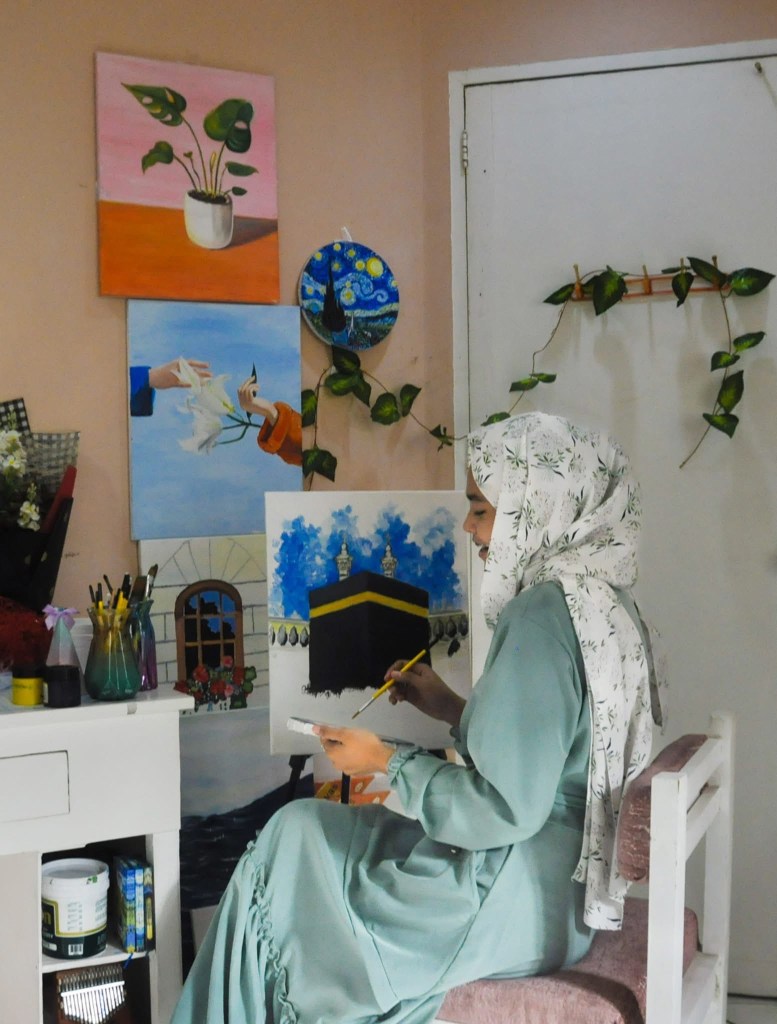
7. Please tell us about your Moro roots. How did it influence you as an artist?
I am very proud of my Moro roots, with my parents hailing from Maimbung and Luuk in the Sulu province. My identity as a Moro deeply influences my perspective and work as an artist. It’s something that naturally flows into my creativity. Being Moro has shaped my sense of pride and purpose, motivating me to represent my community and share its beauty with a wider audience.bout your Moro roots. How did it influence you as an artist?
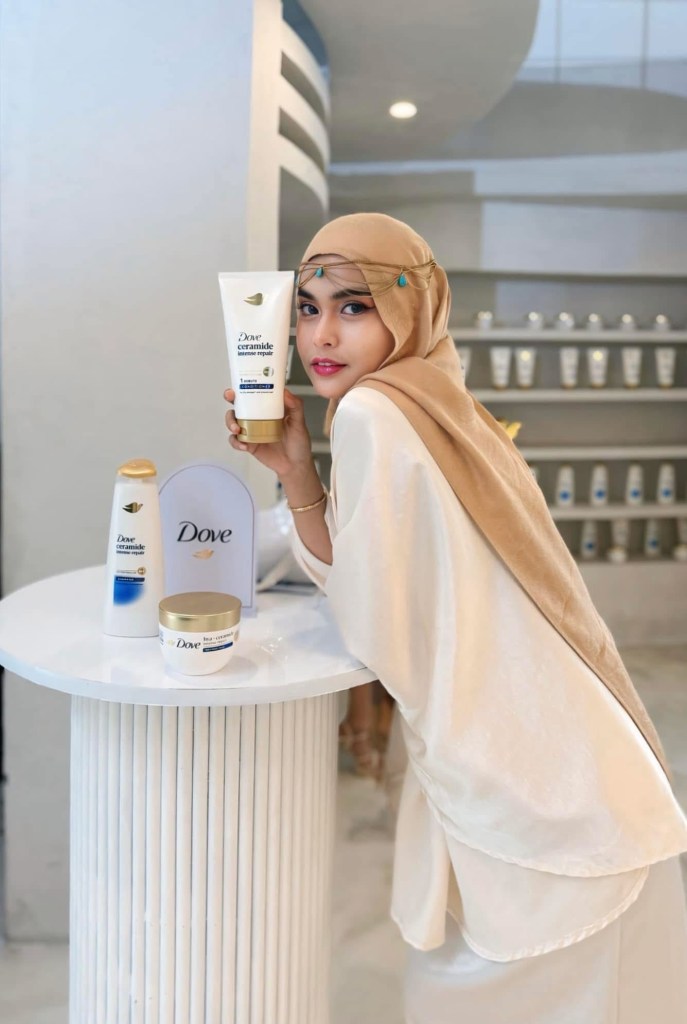
8. You’ve been featured in Dove campaign very recently as being one of the lovely faces featured in the giant billboard in the capital city-Manila, how did it feel to finally see yourself up there?
I am incredibly overwhelmed and grateful to Dove and Unilever for welcoming and accepting a hijabi to represent their brand. Seeing myself on the giant billboard in the capital city felt surreal, something I never expected to achieve. It’s such an honor to be part of their campaign, and I’m truly happy to represent hijabis in this way. It’s a moment that reminds me how far I’ve come and inspires me to continue embracing opportunities with gratitude.

9. We know that in the fashion and social media industry, it is sometimes a challenge for a hijabi girl to keep her hijab. We knew some influencers who started as a hijabi but gave up wearing it later on when fame picked up. How did you remain steadfast? What advice can you give to those girls in social media sphere, especially the teenagers?
“As I’ve mentioned before, I have never thought about removing my hijab because it has become a significant part of my identity and my trademark to others. It represents who I am and what I stand for. My advice to young girls, especially teenagers, is to always remember Allah (SWT), the Creator of everything, and to stay connected to Him. This world is only temporary, and staying true to your faith and values will always guide you in the right direction. Embrace your hijab with pride. it’s a beautiful expression of your faith and strength.”
10. How do you define modest fashion? What are the key factors that girls should consider when picking an outfit for themselves?
Modest fashion, to me, is about maintaining your personal style while upholding principles of modesty in accordance with your values and beliefs. It’s important that the event or occasion is well-researched and prepared, ensuring that everything aligns respectfully with both public and Muslim community standards. As for picking an outfit, it’s less about following trends and more about staying true to modesty. Any outfit can work as long as it respects the essence of modesty, allowing the individual to feel comfortable and confident while staying true to themselves.hemselves?

11. Lastly, how do you see the future of modest fashion in the Philippines and why is it important to have diverse representation?
“I believe the future of modest fashion in the Philippines is bright and filled with potential. As more people embrace inclusivity and diversity, there is a growing recognition of the importance of representing different cultures and values in the fashion industry. Having diverse representation in modest fashion is crucial because it allows people from all walks of life to feel seen and appreciated. It creates space for individuals to express themselves confidently while respecting their beliefs and identities. Diverse representation not only enriches the fashion industry but also promotes understanding, acceptance, and unity in our society.”


 MODESTFASHIONDESIGNERS.COM
Leave a comment