
Words by Joean “Iman” Montayre
For modest fashion enthusiasts, especially the Muslim community who had been the most vocal champions of the modest fashion movement, it was a breath of fresh air. Modest Fashion Weeks made a bold statement, setting up a massive runway where models draped in long, flowing, and elegant outfits commanded one of the most spectacular events in modern fashion history. To the world, it might have seemed like just another runway show, but for Muslims, it was a triumphant moment, a sweet victory that validated their style and culture on a global stage.
It was 2016 in Istanbul, and the stage was set, not for conventional high fashion, but for modest fashion to shine like never before. For the first time, modest fashion took the spotlight with such grandeur that it created a media frenzy, shaking the foundations of a fashion industry long dominated by mainstream trends. The idea that modest fashion could make a significant return, strong enough to stand shoulder-to-shoulder with mainstream fashion, once seemed like an improbable dream. Yet, it happened, and it happened in spectacular fashion.
Why did this matter?
It wasn’t the first time modest fashion enthusiasts from conservative communities had organized a fashion show. But Modest Fashion Weeks stood out from all past and present modest fashion shows because of its inclusivity and broad appeal. It wasn’t about pushing religious agendas—it was purely about celebrating modest fashion. This event recognized the need to evolve and adapt, eloquently addressing the issues of globalization and how to redefine modest fashion in a modern context. Organized by ThinkFashion and Council of Modest Fashion under the leadership of its founder-Franka Soeria, in collaboration with Modanisa, the show brought together the most talented designers in the modest fashion world to break down barriers and make history.
The extravagance and exclusivity of the event matched that of the elite fashion circles. The production quality and creativity rivaled that of the biggest fashion giants. What had once been a distant dream for every modest fashion designer—the chance to bask in the spotlight of the global fashion scene—was finally a reality. The show featured modest fashion designers from every corner of the globe, inviting a diverse range of talent. And significantly, it wasn’t just limited to Muslim-owned brands. Modest Fashion Weeks was about celebrating a shared love for modest fashion, bringing together designers, models, and audiences from different cultures and backgrounds, proving that modesty and style know no boundaries.
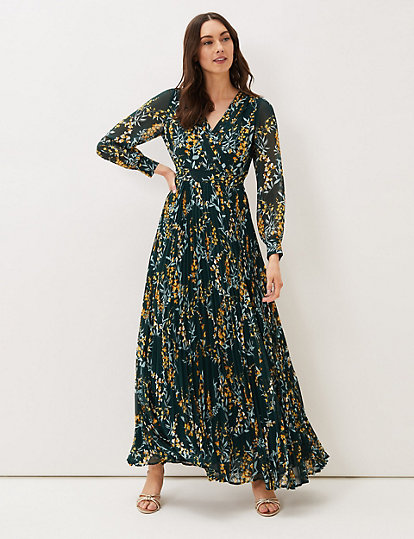
Floral long-sleeved maxi from Marks & Spencer
This is not to say that the modest fashion movement was unheard of before 2016. In fact, it had long been quietly thriving, supported by various fashion shows, communities, and organizations dedicated to promoting modest style. The Islamic Fashion Design Council (IFDC), founded by Alia Khan, was one of the pioneering forces in bringing the voice of modest fashion to the forefront in the West.
And let us not forget the trailblazing Anisa Hasibuan, the first Muslim Indonesian designer to showcase her collection at New York Fashion Week. Her achievement marked a significant milestone, breaking new ground and paving the way for other designers who share her vision to dream big and reach for the same heights. These early pioneers laid the foundation for the modest fashion movement, proving that modesty and style are not only compatible but can shine brightly on the global stage. They were the unsung heroes who made it possible for the modest fashion renaissance we see today, reclaiming its elegance, sophistication, and relevance in a world that had long overlooked its inherent beauty.
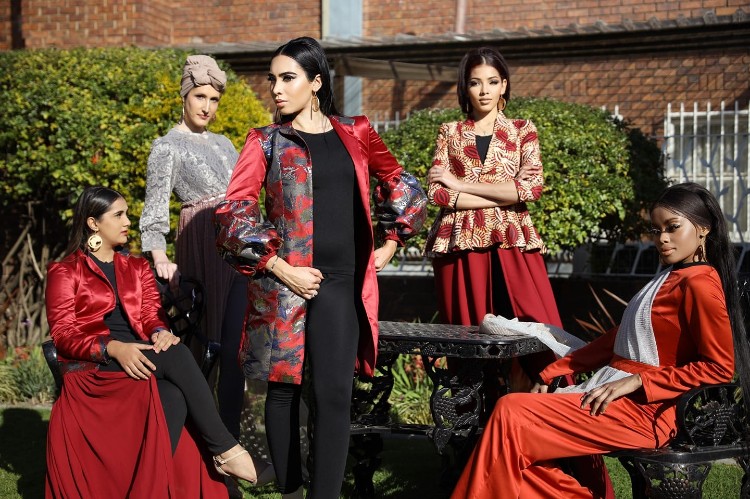
Featured photo from Modesty on Blvd
The grandeur of opulent fashion shows and the rise of modest fashion influencers on social media have undeniably propelled modest fashion into the spotlight, placing it exactly where we envisioned. But now, as we stand on the threshold of this triumph, the question looms: what comes next?
The modest fashion movement has successfully captivated consumers’ interest, sparking curiosity and demand. But do we truly have the resources and accessibility to meet this growing appetite? Are we offering the variety that this diverse and vibrant community deserves? Are we anticipating the challenges that lie ahead, or merely reacting to those that are already unfolding?
What I see is a landscape that still falls short. Despite the proliferation of brands on Instagram, the choices remain limited, confined to a narrow scope. Where are the offerings for children’s wear, men’s wear, or the ready-to-wear collections for brides and grooms? What about the needs of petite individuals, the plus-size community, or those seeking activewear for athletes? Where is the representation for older adults, teenagers, corporate professionals, or the specific needs of breastfeeding and pregnant women? Too often, modest fashion seems to cater only to women within a particular age range and body type, overlooking the rest of us.
It’s as though modest fashion has forgotten the richness of the diversity that lies at its heart. If we truly want to lead a movement, we must be inclusive and forward-thinking, creating options for everyone who seeks to embrace modesty in their own unique way. It’s time to expand our horizons and bring modest fashion to every corner of our community, ensuring that no one feels left out, no matter their age, size, or lifestyle. Only then can we truly say that modest fashion has fulfilled its promise.

Photo Courtesy of Virginia Gomes via Pinterest
Self-sufficiency begins with raw materials. We must take a page from the playbooks of fashion giants like Dior, Versace, and others. These iconic brands have exclusive access to their own raw materials, crafting their unique textiles and accessories. They are committed to exclusivity, originality, and uncompromising quality.
It is time for us in the modest fashion industry to take responsibility for our own supply chains, to cultivate and produce the raw materials essential for our growth. This is not just about sustaining the industry; it is about enabling modest fashion brands to truly flourish and set themselves apart on the global stage.
Let us also recognize that the modest fashion market is vast. We are not alone in our embrace of modesty. Jewish, Christian, and other faith communities, as well as secular individuals, also value modest attire. Modesty transcends religious obligation; it is a social responsibility and a personal choice that resonates across cultures and beliefs.
As I close this article, I do so with the hope of seeing a more inclusive, innovative, and self-reliant modest fashion industry—one that not only meets the needs of every community but also stands as a testament to the power of modesty in a modern world. The future of modest fashion is bright, and it is ours to shape.
*This article was written and published for Al Huda Center of Modest Fashion


 MODESTFASHIONDESIGNERS.COM